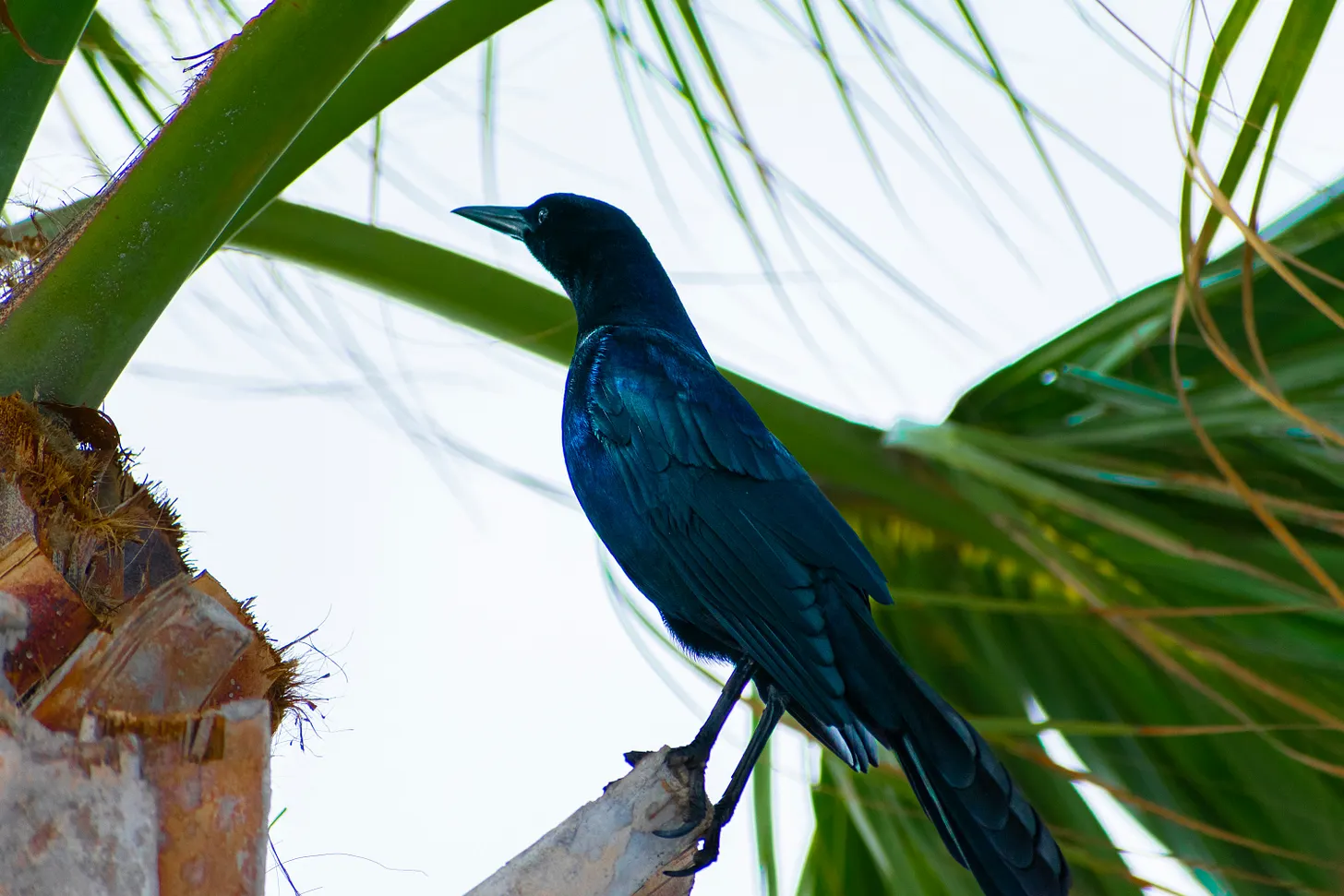
In the Yoga Vāsiṣṭha there is a beautiful parable of the crow and the coconut. A crow flies toward a coconut palm and lands on one of its branches. At that very moment, a coconut falls to the ground. Anyone watching might immediately think: “The crow made the coconut fall.” But did it? Perhaps the coconut was already ripe, already about to fall. Perhaps it would have fallen at exactly that moment even if the crow had never arrived. Two things happened at the same time. And the mind connected them. Something happens, and almost immediately the mind begins to build around it. Why did it happen? What caused it? What does it mean? What does it say about me, about you, about my life? The crow lands, the coconut falls, and from those two simple events, an entire world can be created.
This is what the mind does all the time. It takes what has already happened and gives it a meaning. Then it carries that meaning into what we call the future. But what is the future, really, except the past being projected forward? And where is the past now? It exists only as memory, as thought, as an image arising in consciousness. Even what we call “the present moment” is impossible to hold. The instant we say, “This is happening now,” that “now” is already gone. So where exactly is time? The deeper you look, the less solid it becomes. Past, present and future begin to look like constructions of the mind. And then we begin to see how much can be added to what simply appears to happen. A cause, a meaning, a story, a “me” to whom it happened. A dream within a dream. When we begin to see this deeply — that at the very source nothing has ever really happened — something in life becomes lighter. The crow still lands, the coconut still falls and life continues to appear.
There is no need to control the dream.